



No. 01
*stakkaz
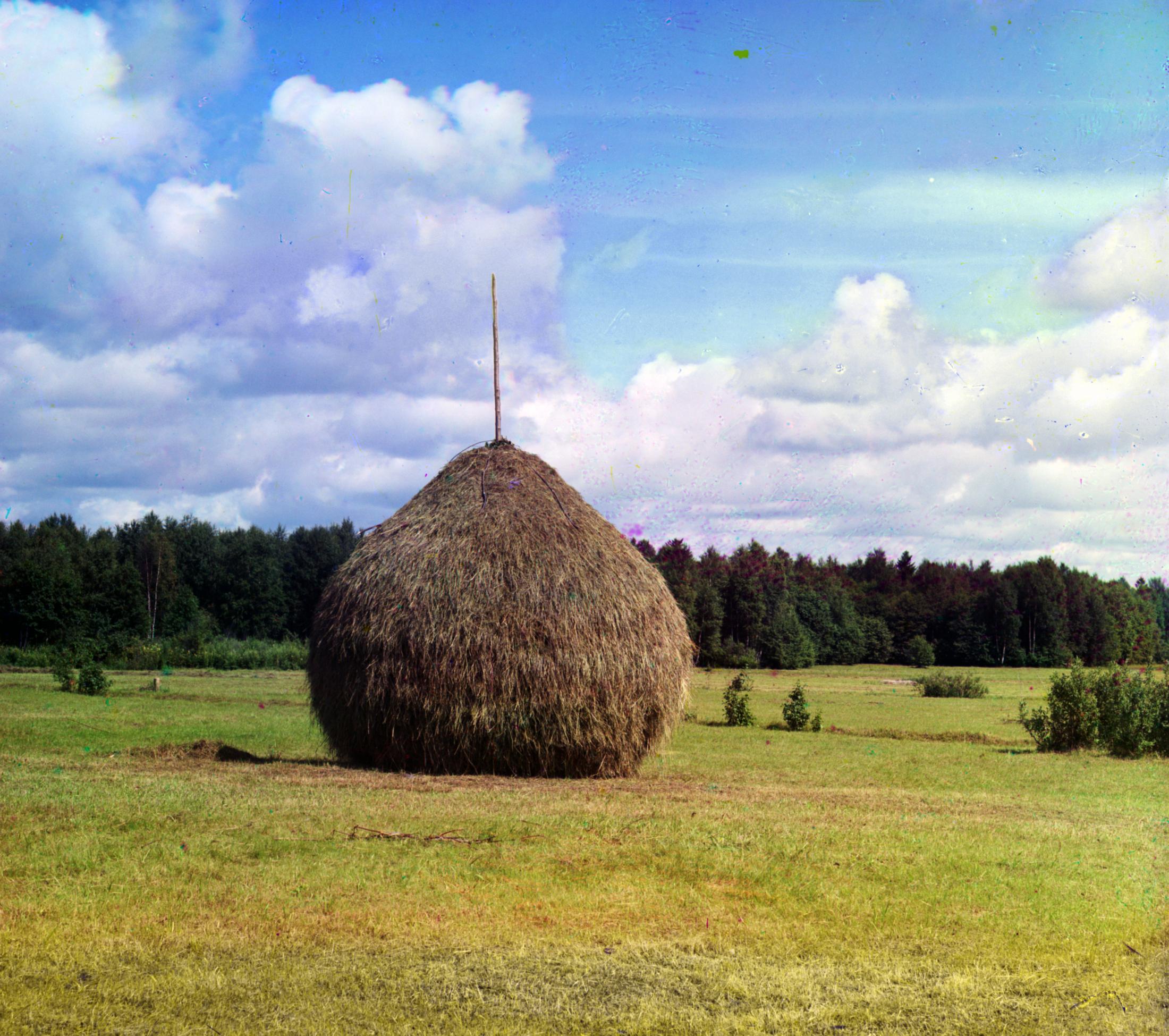
Proto-Germanic, c. 500 BCE, reconstructed
haystack, rick
Our name is a word nobody wrote down. Linguists rebuilt it from the languages that inherited it. Its root, *steg-, meant a pole.
No. 01
Proto-Germanic, c. 500 BCE, reconstructed
haystack, rick
Our name is a word nobody wrote down. Linguists rebuilt it from the languages that inherited it. Its root, *steg-, meant a pole.
No. 02
Old Norse, c. 800–1050
haystack, heap, pile
The Norse called it stakkr and carried it across the North Sea to England.
No. 03
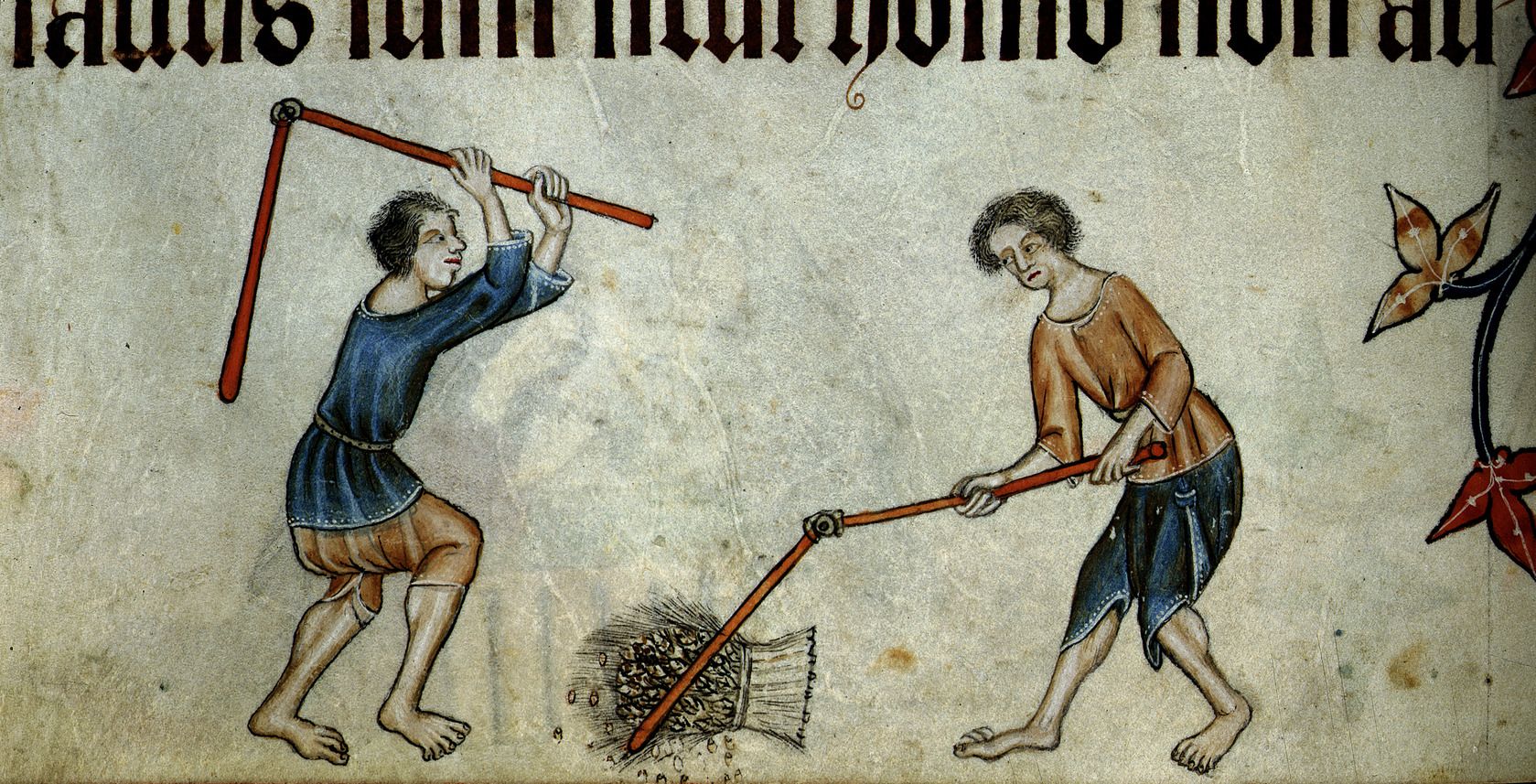
Middle English, c. 1300
a pile of grain or hay
English took it in as stak and made it a verb. To stack was to pile grain on purpose, one sheaf on another.
No. 04
Early Modern English, by the 1660s
chimneys standing together
The word left the farm. By the 1660s a stack could be chimneys standing together, or rifles leaned into a pyramid.
No. 05
Libraries, 1879
shelves of books
Libraries called their shelving the stacks: books kept one above another, so they could be found again.
No. 06
Software, 1998
layers that work together
In 1998 the German magazine c’t named Linux, Apache, MySQL and PHP the LAMP stack: layers, each relying on the one beneath.
No. 07
Everyday English, by the 2000s
what you take, together
Nobody takes one supplement. What people take together came to be called a stack: several supplements, taken toward the same goals.
No. 08
Our first name, January 12, 2025
a chatbot for supplement questions
Our first attempt at one question: what is most worth adding to my stack? A chatbot’s answer depended on what it happened to retrieve and how the question was asked.
No. 09
Our name, Now
a pile built deliberately, piece by piece
So we went back to the word. The research, made comparable: what changed, for whom and in which outcomes. Your stack, calculated around you.
An exhibition in nine objects